

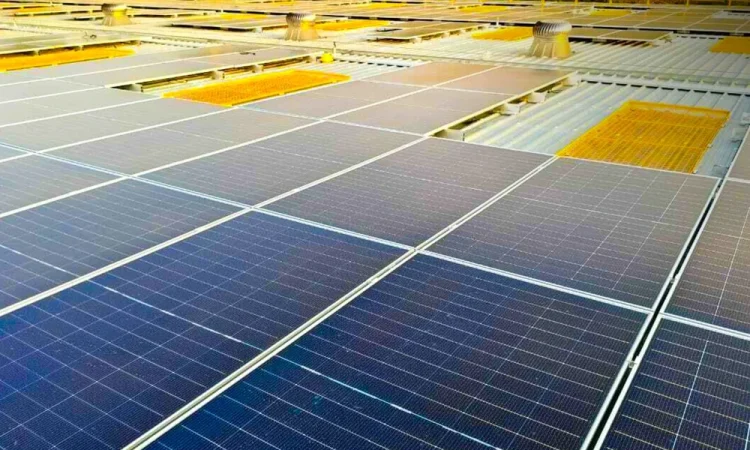
Indian businesses have understood the economics of solar for years. What changed recently is their willingness to act on that understanding, and the change is largely explained by the maturation of commercial solar financing as a product category. The upfront capital requirement that once made solar a decision reserved for large enterprises with significant cash reserves is no longer the barrier it was. Commercial solar loans structured around cash flow realities, repayment schedules aligned with energy savings, and financing tenures that reflect the long operational life of solar assets have together removed the financial friction that was holding the majority of businesses back.
The result is a market that is moving faster than at any previous point, with MSMEs, commercial establishments, institutions, and industrial consumers all actively evaluating solar not as a sustainability statement but as a straightforward financial decision.
The Business Case Has Never Been Clearer
For any business spending significantly on electricity, the financial argument for commercial solar is now compelling across virtually every sector and geography in India. Electricity tariffs for commercial and industrial consumers have risen consistently, and the trajectory shows no sign of reversing. A solar system installed today locks in a significant proportion of the business’s energy cost at a known rate for the next 25 years, providing the kind of energy cost predictability that conventional grid supply cannot offer.
The core financial outcomes that commercial solar financing enables businesses to achieve include:
- Immediate reduction in monthly electricity bills from the first month of operation
- Repayment of the commercial solar loan through savings generated by the system itself, making the net cash flow impact broadly neutral or positive from day one
- Full ownership of the asset at the end of the loan tenure, after which the system continues generating effectively free electricity for the remainder of its operational life
- Protection against future tariff increases, which represent a significant and growing cost risk for grid-dependent businesses
- Depreciation benefits and, in applicable cases, accelerated depreciation under Income Tax rules that improve the financial return further
Loan vs Lease: Why Ownership Is the Right Structure for Most Businesses
A recurring question in commercial solar financing conversations is whether a loan-based ownership model or a lease arrangement better suits the business. The answer for most businesses is ownership, and the reasoning is straightforward.
Under a lease, the business pays a per-unit or fixed monthly charge for the electricity generated by a system it does not own. The system owner captures the asset value, the depreciation benefits, and any applicable government incentives. The business saves some electricity cost but does not build any equity and has no protection against the lease terms changing at renewal.
Under a commercial solar loan, the business owns the system from the outset. All government subsidies and incentive benefits accrue to the owner. Depreciation is available to the owner. At the end of the loan tenure, the business owns an asset that continues generating savings with zero ongoing financing cost. The total economic outcome of ownership over a 20 to 25 year system life is substantially better than leasing in most commercial scenarios.
What the Financing Process Involves
Solar system financing for commercial projects follows a structured process that is considerably more straightforward than many businesses expect. The key stages typically involve:
- Initial assessment of the business’s energy consumption profile, roof or land availability, and basic financial parameters
- System design and cost estimation tailored to the business’s specific consumption and site characteristics
- Loan application with evaluation of business financials and project viability, typically resulting in approval within a few business days for complete documentation
- Phased disbursement aligned with project milestones, ensuring that funds are released in step with actual installation progress
- Repayment structured around the savings the system generates, with tenures typically ranging from three to seven years depending on system size and business profile
Choosing a Financing Partner That Understands the Full Picture
The quality of commercial solar financing companies varies considerably, and the difference is most apparent not in the headline interest rate but in the depth of the ecosystem they bring alongside the financing. A financing partner who understands solar system design, works with a network of verified installers, and provides post-installation performance monitoring is delivering a meaningfully better outcome than one who provides only the capital and leaves the business to manage the rest independently.
Solar system financing decisions should therefore evaluate the partner’s installer network quality, their involvement in the installation process, the availability of performance monitoring tools after commissioning, and their track record of completed commercial projects. The lowest cost of capital from a provider with weak execution support may produce a worse total outcome than a marginally higher rate from one who brings the full ecosystem.
_________________________________________________________