
Revolutionizing Construction: How Modern Cement Grouting Enhances Ground Stabilization and Structural Integrity

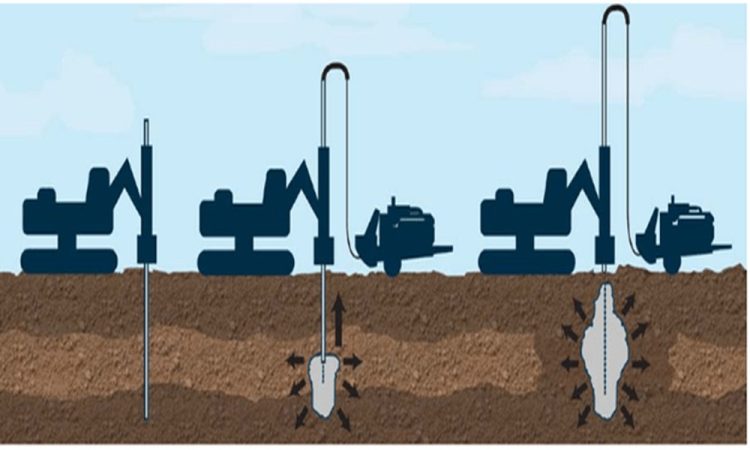
In today’s rapidly evolving construction industry, innovation plays a crucial role in overcoming complex engineering challenges. One such innovation that has significantly transformed ground improvement and structural repair is modern cement grouting.
From stabilizing weak soils to reinforcing aging structures, cement grouting has become an essential technique in both new construction and rehabilitation projects. With advancements in materials, equipment, and monitoring technologies, modern grouting methods are more precise, efficient, and reliable than ever before.
What is Cement Grouting?
Cement grouting is the process of injecting a fluid mixture of cement, water, and sometimes additives into soil, rock, or structural voids. Once injected, the grout fills gaps, hardens, and improves the strength and stability of the surrounding material.
This technique is widely used to enhance load-bearing capacity, reduce permeability, and strengthen foundations.
The Evolution of Cement Grouting
Traditional grouting methods were effective but often lacked precision and control. Modern cement grouting has evolved with the introduction of:
- High-performance grout materials
- Computer-controlled injection systems
- Real-time monitoring technologies
- Microfine and ultrafine cement particles
These advancements allow engineers to tailor grouting solutions to specific soil conditions and project requirements.
How Modern Cement Grouting Enhances Ground Stabilization
Improved Soil Strength
Modern grouting techniques increase the density and strength of weak soils, enabling them to support heavier loads.
Reduced Settlement
By filling voids and binding soil particles, grouting minimizes both total and differential settlement.
Increased Bearing Capacity
The treated ground can safely carry structural loads, reducing the risk of foundation failure.
Enhanced Soil Uniformity
Grouting improves consistency in soil properties across the site, leading to better performance.
Strengthening Structural Integrity
Cement grouting is not limited to soil improvement-it also plays a vital role in structural reinforcement.
Crack Repair
Grouting fills cracks in concrete structures, restoring their strength and durability.
Void Filling
It eliminates gaps beneath foundations and slabs, preventing further damage.
Waterproofing
Grouting reduces water seepage, protecting structures from moisture-related deterioration.
Foundation Stabilization
It reinforces existing foundations, extending the lifespan of buildings and infrastructure.
Advanced Grouting Techniques
Jet Grouting
Uses high-pressure jets to mix grout with soil, forming strong columns.
Compaction Grouting
Injects stiff grout to densify loose soils without significant displacement.
Permeation Grouting
Allows grout to flow through soil pores, improving strength without disturbing the structure.
Fracture Grouting
Creates controlled fractures that are filled with grout to strengthen the ground.
Key Benefits of Modern Cement Grouting
- High precision and control
- Adaptability to various soil conditions
- Cost-effective compared to major reconstruction
- Minimal disruption to existing structures
- Long-term durability and performance
Applications in Modern Construction
Modern cement grouting is widely used in:
- Foundation stabilization
- Bridge and dam construction
- Tunnel reinforcement
- Repair of existing buildings
- Ground improvement for high-rise structures
It is particularly valuable in urban areas where construction must occur alongside existing infrastructure.
Challenges and Considerations
Despite its advantages, successful grouting requires careful planning:
- Accurate soil investigation is essential
- Proper mix design must be selected
- Injection pressure must be controlled
- Skilled supervision is required
Conclusion
Modern cement grouting has revolutionized the way engineers approach ground stabilization and structural reinforcement. With advanced techniques and technologies, it offers a reliable, efficient, and cost-effective solution for complex construction challenges.
As infrastructure demands continue to grow, cement grouting will remain a key tool in building safer, stronger, and more durable structures.